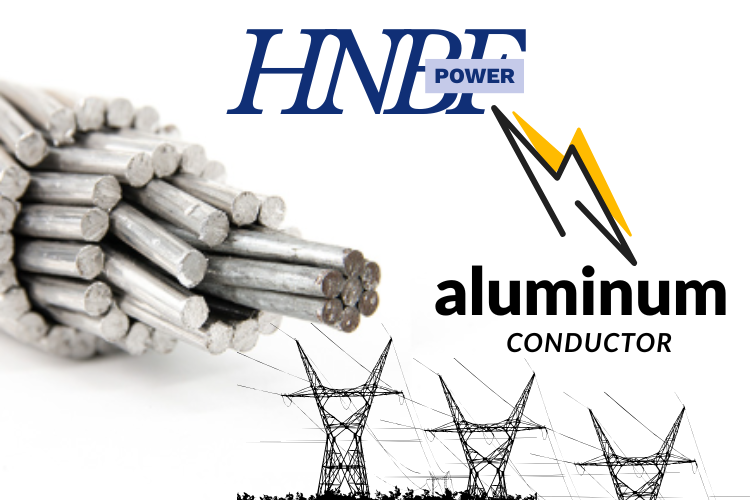
In today’s rapidly expanding power transmission and distribution sector, selecting the right aluminum conductor is no longer just a technical decision it is a strategic investment that directly impacts grid reliability, project cost, and long-term performance. For utilities, EPC contractors, consultants, and procurement teams, the challenge is balancing electrical efficiency, mechanical strength, corrosion resistance, and budget control.
As a global manufacturer of overhead conductors, ABC cables, and power transmission solutions, HNBF Power helps solve these critical challenges with high-performance aluminum conductor systems engineered for modern utility projects.
Why Aluminum Conductor Is the Preferred Choice in Power Transmission
Aluminum conductor has become the industry standard for overhead line construction because it offers an excellent balance between conductivity, lightweight design, and cost efficiency.
Compared with copper, aluminum provides:
- Lower overall project cost
- Reduced line weight and easier installation
- Better suitability for long-span transmission routes
- Strong corrosion resistance in outdoor environments
- Excellent conductivity-to-weight ratio
For large-scale utility infrastructure, these advantages directly reduce tower loading requirements, transportation costs, and installation complexity, making aluminum conductor highly attractive for procurement decision-makers.
HNBF Power manufactures a full range of aluminum-based conductor solutions for transmission and distribution networks, supporting projects from low-voltage urban systems to high-capacity overhead transmission lines.
Key Types of Aluminum Conductor for Utility Projects
Choosing the right conductor type depends on voltage level, environmental conditions, span length, and mechanical stress requirements.
AAC – All Aluminum Conductor for Urban Distribution
AAC is widely used in urban overhead distribution where span lengths are shorter and corrosion resistance is important.
Key benefits include:
- High conductivity
- Excellent corrosion resistance
- Easy bending and installation
- Ideal for densely populated city grids
AAC is commonly selected for municipal utilities, street feeder lines, and coastal distribution networks.
AAAC – Better Strength for Long Spans
For projects requiring improved tensile strength and better sag performance, AAAC (All Aluminum Alloy Conductor) is often the better choice.
It delivers:
- Higher mechanical strength than AAC
- Improved sag characteristics
- Better resistance to vibration fatigue
- Long service life in harsh weather
This makes AAAC highly suitable for mountainous terrain, windy areas, and long-span rural electrification projects.
ACSR – Balanced Conductivity and Mechanical Strength
For heavy-duty transmission lines, ACSR (Aluminum Conductor Steel Reinforced) remains one of the most widely used conductor types.
Its aluminum outer layers provide strong conductivity, while the steel core improves tensile strength.
This helps solve common buyer pain points such as:
- Long transmission distance losses
- High mechanical loading
- Ice and wind stress
- Tower-to-tower long span requirements
HNBF Power provides ACSR conductors designed for stable performance in demanding utility environments.
Common Procurement Pain Points When Buying Aluminum Conductors
For procurement buyers and EPC teams, conductor purchasing decisions often involve several risk factors.
1) Inconsistent Material Quality
Low-grade aluminum rods can lead to poor conductivity, overheating, and reduced service life.
HNBF Power addresses this through strict raw material control, international production standards, and quality testing for conductivity, tensile strength, and elongation.
2) Delivery Delays in Utility Projects
Transmission projects often run on strict milestone schedules. Delayed conductor supply can affect tower erection, line stringing, and energization plans.
With scalable manufacturing capacity and export experience, HNBF Power supports stable lead times for global utility and EPC projects.
3) Wrong Conductor Selection for Application
A mismatch between conductor design and project conditions can increase sag, failure risk, and maintenance costs.
HNBF Power’s engineering team works closely with buyers to recommend the right conductor based on:
- Voltage level
- Span length
- Ambient temperature
- Wind and ice loading
- Corrosion exposure
- Budget objectives
This customized approach reduces lifecycle cost and improves grid reliability.
How HNBF Power Adds Value Beyond Product Supply
A major challenge in power infrastructure procurement is finding a supplier that offers not only manufacturing but also engineering support and project alignment.
HNBF Power stands out by delivering:
Technical Design Support
Customized conductor recommendations based on utility standards and project drawings.
Flexible Manufacturing
Support for AAC, AAAC, ACSR, ABC cable, LV power cable, and concentric cable requirements.
International Export Standards
Products manufactured for global compliance across utility, industrial, and EPC sectors.
Stable Large-Scale Supply
Reliable volume production for national grid expansion, substation feeder upgrades, and renewable energy evacuation lines.
For engineers and procurement managers, this reduces sourcing risk and improves project execution confidence.
Best Applications of Aluminum Conductor in Modern Grids
Aluminum conductor products from HNBF Power are widely used in:
- Overhead transmission lines
- Medium-voltage and low-voltage distribution
- Rural electrification
- Renewable energy grid integration
- Industrial power supply networks
- Utility modernization projects
- Smart grid expansion infrastructure
Its versatility makes it one of the most important materials in modern electrical infrastructure.
FAQs About Aluminum Conductor
What is the main advantage of aluminum conductor?
The main advantage is its excellent conductivity-to-weight ratio, which lowers installation costs while maintaining strong electrical performance.
Is aluminum conductor suitable for long transmission lines?
Yes. Types such as AAAC and ACSR are specifically designed for long spans and high mechanical load applications.
Which is better: AAC, AAAC, or ACSR?
The best option depends on project conditions. AAC is ideal for urban distribution, AAAC for better strength, and ACSR for long-span transmission.
Does HNBF Power provide customized conductor specifications?
Yes. HNBF Power supports customized sizes, stranding structures, and technical solutions based on project requirements.
Can aluminum conductors resist harsh outdoor environments?
Yes. Properly designed aluminum conductors offer excellent corrosion resistance and reliable outdoor performance.
Build Reliable Power Networks with HNBF Power
When utility performance, cost efficiency, and long-term reliability matter, choosing the right aluminum conductor supplier is critical. HNBF Power combines global manufacturing capability, strict quality standards, and project-focused engineering support to help utilities and EPC contractors reduce risk and improve grid outcomes.
Contact HNBF Power today for customized aluminum conductor solutions tailored to your transmission and distribution project needs.

 English
 Arabic
 French
 Spanish
 Portuguese
 Deutsch
 Turkish
 Dutch
Dutch
 Italiano
 Russian
 Romaian
 Greek
Greek
 Indonesia