
Digital advertising is changing fast and in 2026, one of the biggest shifts is the rise of Performance Max (PMax) campaigns.
If you’re running ads or working with a digital marketing agency, you’ve probably heard about them. But many beginners still find them confusing.
Are they worth it? How do they work? And how can you use them without wasting money?
This guide will explain everything in a simple and practical way.
Why Performance Max Is So Popular
In the past, marketers had to create separate campaigns for:
-
Search ads
-
Display ads
-
YouTube ads
-
Shopping ads
This made campaign management complex and time-consuming.
Performance Max changed this.
Now, with a single campaign, you can run ads across all Google platforms:
-
Google Search
-
YouTube
-
Gmail
-
Display Network
-
Discover
A professional digital marketing agency uses PMax to simplify campaigns and reach more users efficiently.
What Is Performance Max?
Performance Max is a goal-based campaign type in Google Ads that uses AI (Artificial Intelligence) to show your ads to the right audience.
Instead of choosing keywords manually, you:
-
Set a goal (sales, leads, traffic)
-
Provide creative assets (text, images, videos)
-
Let Google optimize delivery
It’s part of modern Content marketing and advertising strategies, where automation plays a key role.
How Performance Max Works
Here’s a simple breakdown:
-
You create a campaign
-
Add your assets (headlines, images, videos)
-
Set your budget and goal
-
Google’s AI tests different combinations
-
The system shows the best-performing ads
Over time, it learns what works and improves results.
Step-by-Step Guide to Setting Up a PMax Campaign
Let’s go step by step.
Step 1: Define Your Goal
Start by deciding what you want:
-
More sales
-
More leads
-
More website traffic
For example, a digital marketing agency may run a PMax campaign to generate leads for services like SEO or Content marketing.
Step 2: Add High-Quality Assets
You need to provide:
-
Headlines
-
Descriptions
-
Images
-
Videos
Tips:
-
Highlight benefits
-
Keep text simple
-
Use clear visuals
Why it matters:
Better assets = better ad performance.
Step 3: Set Audience Signals
Even though PMax uses AI, you can guide it by adding audience signals like:
-
Interests
-
Website visitors
-
Customer lists
Example:
Target users interested in:
-
SEO
-
Content marketing
-
Digital services
Step 4: Set Budget and Bidding
Choose:
-
Daily budget
-
Bidding strategy (like maximize conversions)
Start small and increase as you see results.
Step 5: Launch and Monitor
Once your campaign is live:
-
Track performance
-
Check conversions
-
Analyze results
Remember: PMax needs time to learn.
Proven Strategies for Success
Experts and every top digital marketing agency follow these strategies to get the best results from PMax:
1. Focus on Conversion Tracking
Make sure you track:
-
Leads
-
Sales
-
Sign-ups
Without tracking, the AI cannot optimize properly.
2. Use Strong Creative Assets
Your ads depend heavily on your inputs.
Use:
-
High-quality images
-
Clear headlines
-
Engaging videos
3. Combine with SEO and Content Marketing
PMax works best when combined with:
-
SEO (for organic traffic)
-
Content marketing (for value-driven engagement)
Example:
Drive users to blog content, then retarget them with ads.
4. Give the Algorithm Time
Don’t make changes too quickly.
Let the campaign run for at least:
-
2–4 weeks
This helps the system learn and improve.
When to Use Performance Max
PMax is powerful, but it’s not always perfect.
Best for:
-
E-commerce businesses
-
Lead generation
-
Brands with good data
Not ideal for:
-
Very small budgets
-
Businesses without conversion tracking
-
Those who want full manual control
A reliable digital marketing agency knows when to use PMax and when to choose other campaign types.
Common Mistakes to Avoid
Many beginners struggle because of these mistakes:
-
Not providing enough assets
-
Ignoring conversion tracking
-
Making changes too quickly
-
Using poor-quality creatives
-
Expecting instant results
Avoiding these can improve your performance significantly.
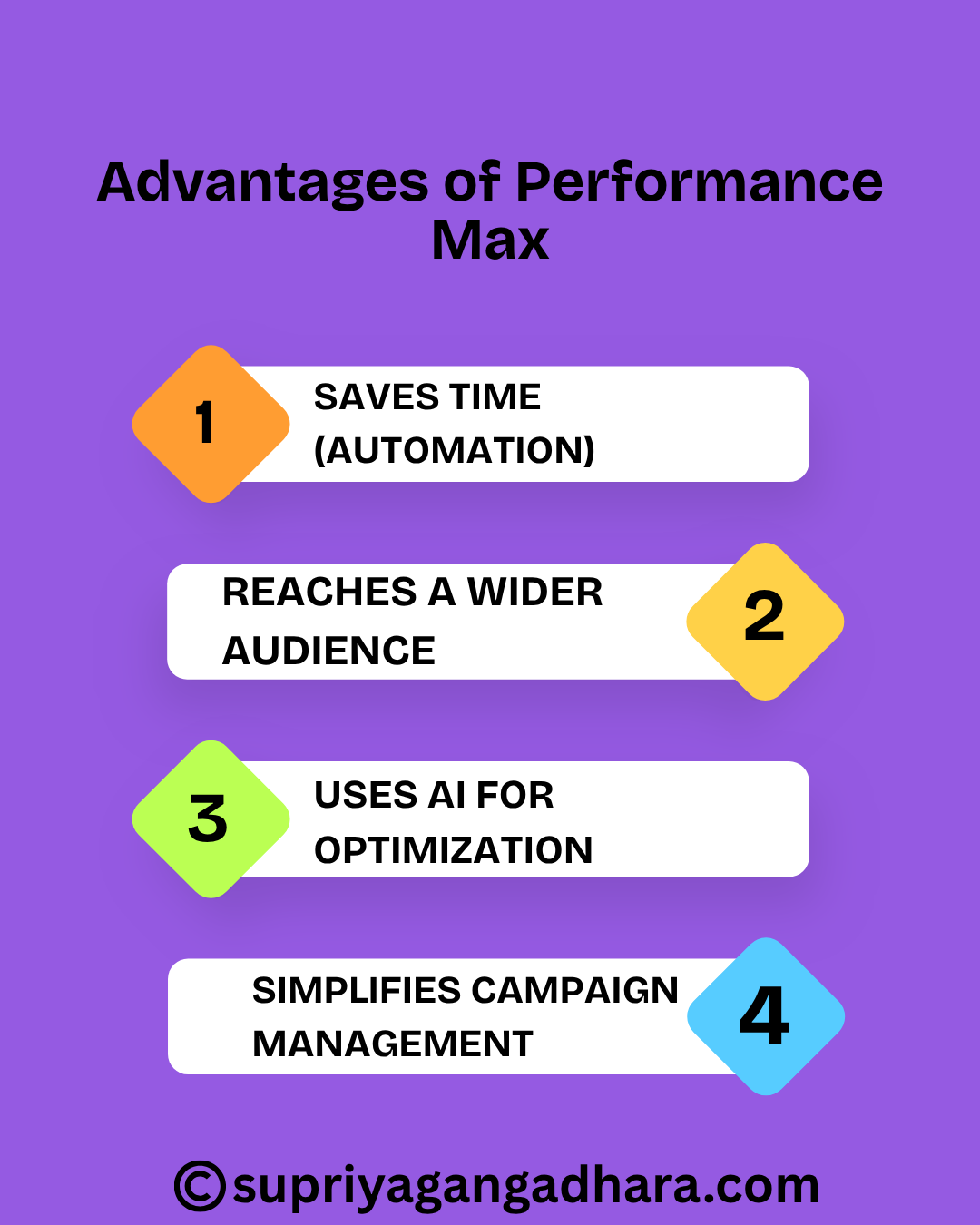
Advantages of Performance Max
Here’s why marketers love PMax:
-
Saves time (automation)
-
Reaches a wider audience
-
Uses AI for optimization
-
Simplifies campaign management
Limitations of Performance Max
It’s not perfect.
-
Less control over placements
-
Limited data transparency
-
Depends heavily on AI
That’s why many experts combine it with other strategies like SEO and Content marketing.
How PMax Fits into Your Marketing Strategy
Performance Max should not be used alone.
A smart strategy looks like this:
-
Use SEO for organic traffic
-
Use Content marketing for engagement
-
Use PMax for paid growth
This combination is used by every successful digital marketing agency.
Conclusion
Performance Max campaigns are powerful tools for marketers in 2026.
By understanding how they work and applying the right strategies, you can:
-
Increase conversions
-
Reach more users
-
Improve efficiency
For any business or digital marketing agency, learning PMax is essential to stay competitive.

 Arabic
 French
 Spanish
 Portuguese
 Deutsch
 Turkish
 Dutch
Dutch
 Italiano
 Russian
 Romaian
 Portuguese (Brazil)
 Greek
Greek
 Indonesia