Anyone who has worked on a concrete job site knows the frustration. You finish pouring, level the surface, and everything looks fine—until the hardened concrete reveals honeycombing, trapped air pockets, or weak spots.
It often happens even when workers follow the usual routine. The real issue is not always the concrete mix or the pouring technique. Sometimes, the problem lies in the compaction process itself.
Many construction teams still rely on older or inefficient vibration tools that struggle to reach tight spaces or fail to distribute vibration evenly. Workers move back and forth repeatedly, trying to eliminate air bubbles, yet the results remain inconsistent. The process becomes tiring, time-consuming, and uncertain.
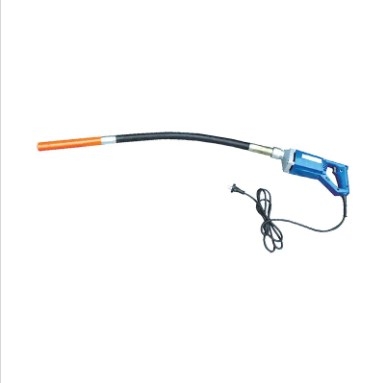
This is where the ZN Series Handheld Concrete Vibrator changes the experience on site. Instead of forcing workers to repeatedly adjust their technique, the tool adapts to the workflow they already know. Operators simply guide the vibrator through the concrete as they normally would, but the vibration penetrates deeper and spreads more evenly.
For structural areas where concrete surrounds steel reinforcement or complicated molds, the Three-phase Attached Vibrator offers another practical advantage. Mounted directly onto formwork, it quietly does the heavy work of transferring vibration through the structure itself. Workers don’t need to constantly reposition handheld tools, especially in areas that are difficult to reach.
What users often notice first is not just the improved concrete density—but the smoother workflow. Workers spend less time correcting issues and more time completing the job confidently.
Even better, these tools fit naturally into existing construction habits. There is no complicated setup, no new learning curve. Crews simply pour, vibrate, and move on with fewer worries about hidden flaws.
And sometimes, the biggest difference on a job site is not a dramatic new method—but a smarter tool that makes the old process finally work the way it should.

 English
 Arabic
 French
 Spanish
 Portuguese
 Deutsch
 Turkish
 Dutch
Dutch
 Russian
 Romaian
 Portuguese (Brazil)
 Greek
Greek
 Indonesia