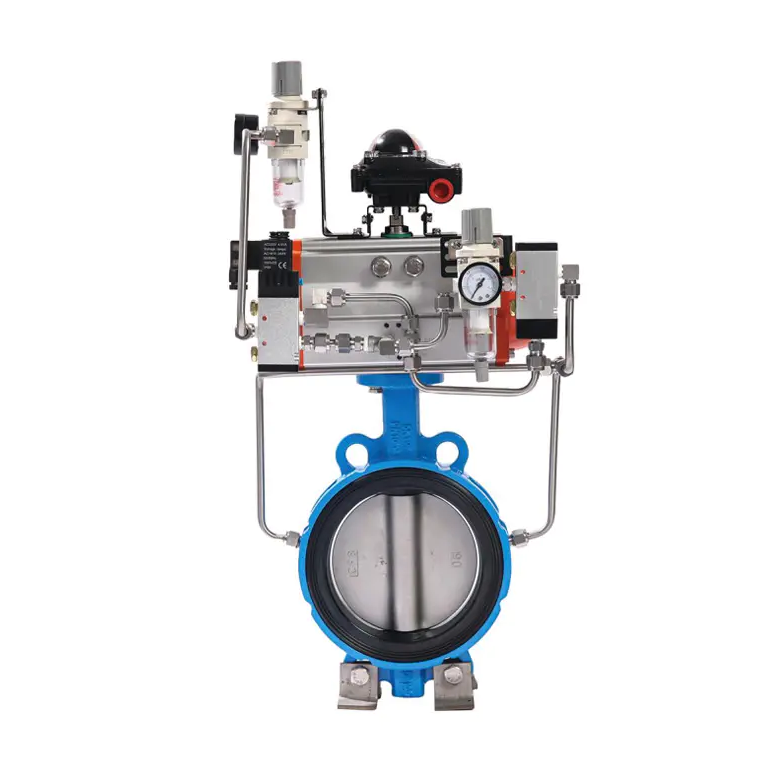
Industrial facilities that handle powders, cement, grain, or mineral materials often rely on a dust butterfly valve to regulate airflow and material movement inside pipelines. The reliability of such components is closely connected with mold manufacturing, because valve bodies and internal parts must be formed with stable dimensions and consistent structure. Through the combination of precise mold development and die casting technology, manufacturers such as Zhejiang Xiafeng Precision Die Casting Co., Ltd. produce valve components that support long-term operation in environments where dust and particulate materials are constantly moving through processing systems.
Dust control systems play an important role in many industries. Facilities involved in cement production, food processing, metal powder handling, or chemical mixing often transport dry materials through pipelines using pneumatic systems. During these processes, regulating the flow of air and powder becomes essential for maintaining safe and efficient operations. A dust butterfly valve acts as a control point that can open or close to manage the movement of materials while helping prevent unwanted leakage.
The basic structure of a butterfly valve includes a circular disc mounted on a rotating shaft inside the valve body. When the shaft rotates, the disc moves to allow or restrict airflow. This relatively simple mechanism makes butterfly valves suitable for frequent operation in systems that require quick adjustments. In dust handling applications, the valve body is typically designed with smooth internal surfaces to reduce the buildup of particles.
The role of mold manufacturing becomes visible during the production of these valve bodies. Creating molds with accurate cavity shapes ensures that the die-cast components maintain uniform thickness and stable geometry. When molds are designed with careful attention to cooling channels and material flow, the resulting castings achieve better dimensional stability. This contributes to the reliability of the valve assembly.
Zhejiang Xiafeng Precision Die Casting Co., Ltd. focuses on developing molds that support aluminum and zinc die casting processes for industrial components. Through the integration of mold design, casting, and finishing, the company is able to produce valve parts used in different dust control systems. Engineers working in mold manufacturing pay attention to details such as gating systems, cooling balance, and surface finishing of the mold cavity. These factors influence how molten metal fills the mold and solidifies into the final component.
Durability is an important factor when valves operate in dusty environments. Fine particles may gradually accumulate around moving parts, which means the materials and surface treatments used for the valve must withstand friction and abrasion. Die-cast metal components provide structural strength while allowing relatively lightweight construction. When combined with appropriate seals and coatings, the valve assembly can function effectively even in demanding industrial conditions.
Another aspect of dust butterfly valve design involves ease of maintenance. Industrial systems often run continuously for extended periods, so equipment must be accessible for inspection and cleaning. The straightforward internal structure of butterfly valves makes it easier to disassemble and service them when necessary. Maintenance teams appreciate equipment that allows quick replacement of worn parts without dismantling large sections of the pipeline.
Environmental awareness has also influenced the design of dust control equipment. Many industrial sectors are working to reduce airborne particles released during production. Efficient valves contribute to this goal by maintaining controlled airflow and preventing dust leakage from processing systems. Mold manufacturing supports these improvements by enabling precise component shapes that seal properly when assembled.
Automation trends in industrial production have further increased the demand for reliable valve components. Sensors and automated control systems often operate valves remotely to manage airflow or material flow in real time. For these systems to work smoothly, the mechanical parts inside the valve must move consistently without excessive friction. Accurate casting and machining help achieve this stability.

 Arabic
 French
 Spanish
 Portuguese
 Deutsch
 Turkish
 Dutch
Dutch
 Italiano
 Russian
 Romaian
 Portuguese (Brazil)
 Greek
Greek
 Indonesia