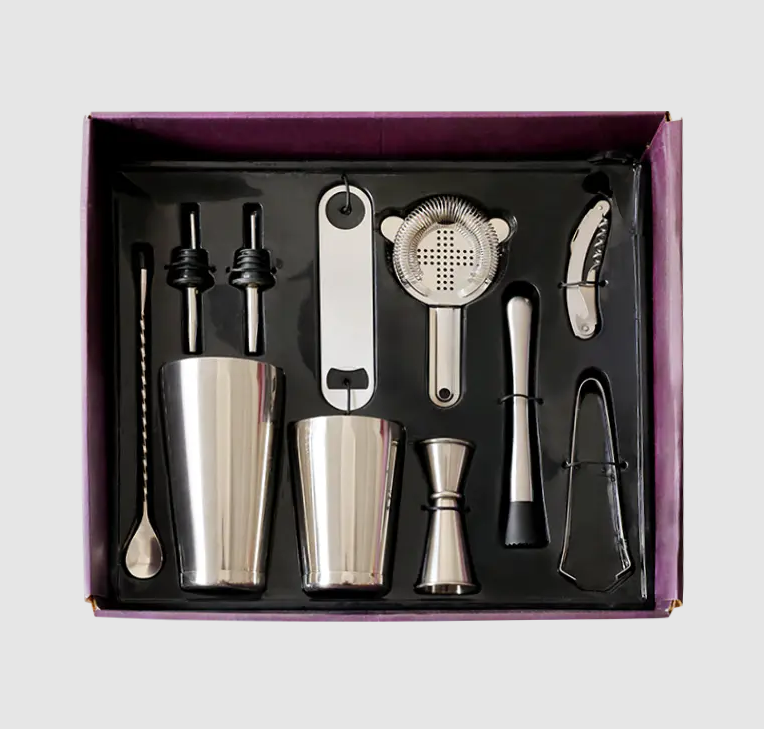
A growing number of people are exploring home cocktail preparation, and a complete bartender kit often becomes the starting point for that journey. When combined with a mixology cocktail kit, the experience becomes more structured, allowing beginners and enthusiasts to experiment with different ingredients and techniques without needing to purchase individual tools separately. Instead of collecting items one by one, a well-organized set introduces the fundamental equipment required for mixing drinks with consistency and confidence.
Cocktail preparation involves more than simply combining spirits and mixers. Measurements, temperature, dilution, and presentation all play a role in shaping the final drink. A bartender kit typically includes tools such as a shaker, jigger, strainer, mixing spoon, and muddler. Each tool contributes to a specific stage of drink preparation. The shaker blends ingredients and chills them quickly, while the jigger ensures accurate measurement. A strainer separates ice and solid ingredients, helping achieve a balanced texture.
Home bartending has gradually shifted from casual experimentation to a small creative hobby. Many people enjoy learning about classic cocktails such as martinis, old fashioneds, or margaritas. With a mixology cocktail kit, users can practice common techniques including shaking, stirring, layering, or muddling. These techniques influence flavor balance, dilution rate, and aroma. Even a small difference in shaking time or stirring speed can change how a drink tastes.
Another factor encouraging interest in cocktail kits is the growing popularity of hosting small gatherings at home. Friends meeting for dinner or casual weekend drinks often appreciate beverages that feel a bit more crafted than simple mixed drinks. A bartender kit placed on a countertop also becomes a conversation piece. Guests may ask questions about the tools or request specific drinks, which naturally creates interaction.
Material choice also matters for cocktail tools. Stainless steel components are widely used because they resist corrosion and maintain a clean surface even after repeated washing. Handles designed for comfortable grip make shaking or stirring easier, especially during longer preparation sessions. Many kits also include storage stands or roll bags that keep tools organized and accessible.
Learning mixology also encourages awareness of ingredients. Fresh citrus juice, herbs, and syrups contribute layers of flavor that bottled mixers cannot always provide. When someone begins experimenting with these ingredients using a mixology cocktail kit, the process becomes similar to cooking. Adjusting sweetness, acidity, or aroma allows the drink maker to create variations of familiar cocktails.
Presentation often receives attention as well. Garnishes such as citrus peels, mint leaves, or cherries give cocktails a visual identity. Tools included in some bartender kits make garnish preparation easier. A bar spoon can twist citrus peel over the glass, releasing aromatic oils that float on the drink’s surface.
Another benefit of owning a complete kit lies in learning consistency. When measuring tools are available, recipes can be repeated with similar results. This encourages confidence, especially for people who enjoy recreating cocktails from bars or restaurants. Over time, many users begin to adjust recipes according to personal preference.
Cocktail culture also connects with broader trends around home creativity. Social media platforms often feature videos showing cocktail preparation, ice carving, or garnish techniques. A mixology cocktail kit allows viewers to try similar ideas at home without complex equipment.

 Arabic
 French
 Spanish
 Portuguese
 Deutsch
 Turkish
 Dutch
Dutch
 Italiano
 Russian
 Romaian
 Portuguese (Brazil)
 Greek
Greek
 Indonesia