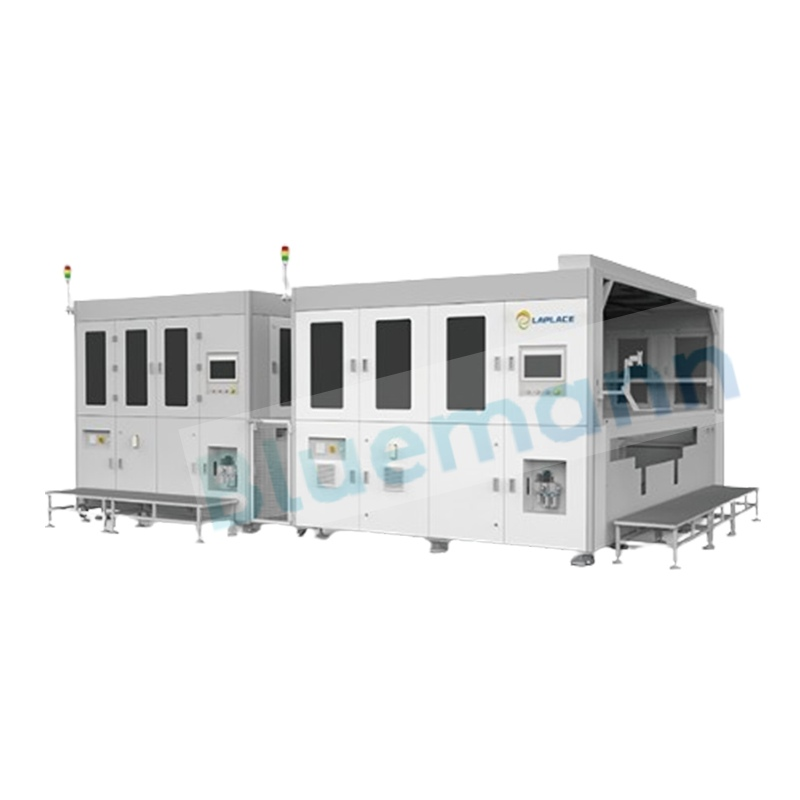
In modern manufacturing, film application is no longer a simple surface-covering process. Many industries, including electronics, optics, and precision components, require highly accurate lamination on workpieces that feature gaps, stepped structures, or irregular surfaces. Conventional laminating equipment often struggles to meet these requirements, leading to misalignment, air bubbles, or inconsistent adhesion. The gap film laminating machine is designed specifically to address these challenges.
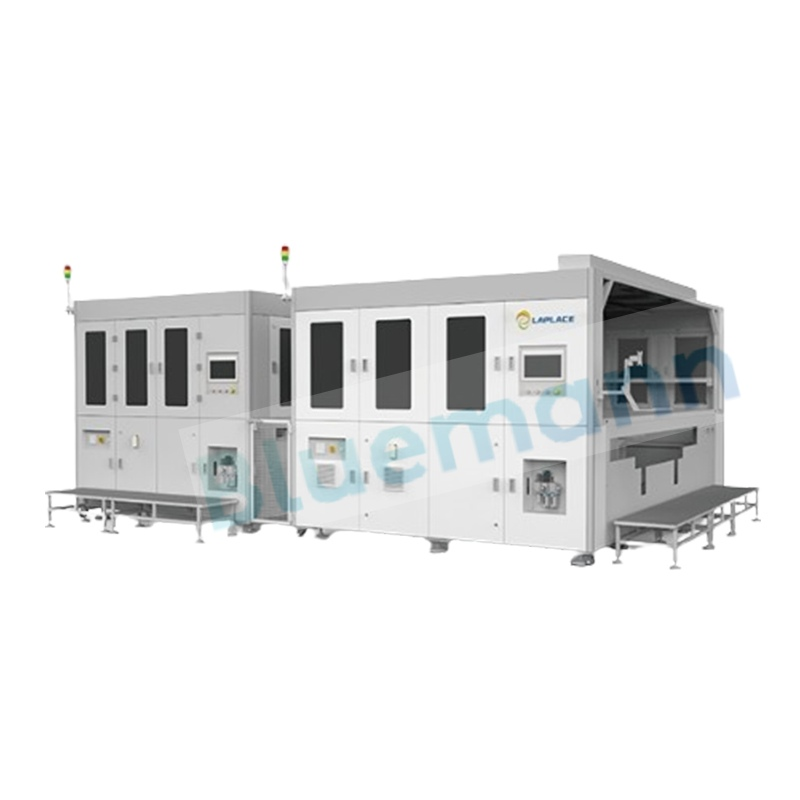
Definition of a Gap Film Laminating Machine
A gap film laminating machine is a high-precision automation system used to achieve accurate application of films such as protective films, optical films, and functional adhesive films onto workpiece surfaces. It is particularly effective in scenarios involving gaps, uneven geometries, or strict alignment tolerances, where precise positioning and stable pressure control are essential.
Precision Motion and Alignment Control
High positioning accuracy is a core requirement in gap film lamination. These machines typically utilize servo-driven motion systems, precision linear guides, and advanced control algorithms to ensure stable and repeatable film placement. Even when laminating across gaps or stepped surfaces, consistent alignment can be maintained throughout the process. Bluemann designs its systems with a strong focus on repeatability and long-term positioning stability in continuous production environments.
Film Tension and Pressure Management
Uniform lamination across complex surfaces requires precise control of both film tension and lamination pressure. Gap film laminating machines are engineered to dynamically adapt pressure distribution when surface height changes occur. This helps prevent common defects such as wrinkles, air entrapment, and film deformation, ensuring a smooth and consistent lamination result.
Compatibility with Multiple Film Materials
Gap film laminating machines are capable of processing a wide range of film materials, including protective films, optical films, and specialty functional films. This versatility allows manufacturers to use a single system for different products and applications, improving equipment utilization and production flexibility.
Typical Industrial Application Scenarios
In electronics and optical component manufacturing, accurate film placement is critical to product performance. Optical films often require micron-level alignment to maintain light transmission characteristics. Gap film laminating machines are also widely used for precision industrial parts that include grooves, recesses, or multi-level surfaces, where manual or conventional lamination methods are unreliable.
Advantages of Automated Gap Film Lamination
Automation significantly improves process consistency compared with manual film application. By reducing dependence on operator skill, gap film laminating machines help increase yield, improve surface quality, and reduce rework rates. Precise film positioning also minimizes material waste, contributing to lower overall production costs.
Integration into Modern Production Lines
Modern gap film laminating machines can be integrated into automated manufacturing lines, supporting standardized workflows and data-driven process control. Bluemann develops equipment with integration capability in mind, enabling compatibility with upstream and downstream automation systems in smart factory environments.
Equipment Selection Considerations
When selecting a gap film laminating machine, manufacturers should evaluate alignment accuracy, pressure control capability, adaptability to different workpiece geometries, and overall system stability. Choosing an experienced equipment supplier such as Bluemann helps ensure reliable performance, technical support, and long-term operational efficiency.
Conclusion
Gap film laminating machines play a critical role in precision manufacturing environments where surface complexity and alignment accuracy are decisive factors. By enabling reliable film application across gaps and irregular surfaces, these machines support higher product quality and more efficient production processes. With application-driven design and precision engineering, Bluemann continues to provide solutions that meet the practical demands of advanced manufacturing.

 Arabic
 French
 Spanish
 Portuguese
 Deutsch
 Turkish
 Dutch
Dutch
 Italiano
 Russian
 Romaian
 Portuguese (Brazil)
 Greek
Greek
 Indonesia