Challenges of High-Temperature Seasons
Working Principle and Circulation Advantage
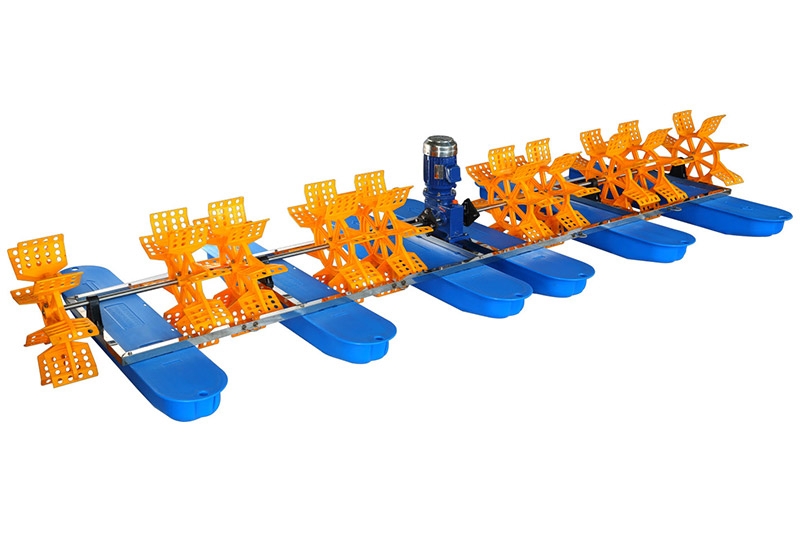
A Water Plowing Aerator operates by pushing and turning large volumes of water horizontally while simultaneously promoting surface agitation. Unlike simple surface splash systems, it creates directional flow across the pond, breaking thermal stratification and improving overall circulation. This mixing action allows oxygen-rich surface water to blend with deeper layers, reducing the formation of oxygen-depleted zones near the bottom. In high-temperature environments where stratification is common, this circulation advantage becomes particularly important.
Oxygen Transfer Under Heat Stress
In hot weather, oxygen demand rises due to accelerated organic decomposition and higher metabolic rates of aquatic organisms. The Water Plowing Aerator helps address this challenge by continuously disturbing the water surface and increasing air-water contact. Although warm water reduces the maximum amount of oxygen that can dissolve, enhanced turbulence improves oxygen transfer efficiency relative to stagnant conditions. By maintaining consistent circulation, the system reduces localized oxygen depletion and stabilizes dissolved oxygen levels throughout the pond.
Prevention of Stratification and Dead Zones
Thermal stratification frequently develops during summer when the surface layer warms while deeper water remains cooler. Without mixing, bottom layers may become oxygen-deficient, creating harmful conditions for benthic organisms and releasing undesirable gases from sediment. The strong horizontal flow generated by plowing-style aeration disrupts this layering effect. Continuous movement redistributes temperature and oxygen more evenly, decreasing the risk of sudden oxygen crashes triggered by weather changes or algae die-offs.
Comparison with Other Aeration Methods
Compared with traditional paddle wheel or simple fountain aerators, plowing systems emphasize whole-pond circulation rather than localized agitation. Paddle wheels are highly effective in intensive aquaculture but may focus on specific zones near the device. Fountain aerators mainly enhance surface oxygenation and visual appeal. In contrast, plowing aerators create broader directional currents, which can be particularly beneficial in medium to large ponds during prolonged heat waves. However, proper sizing and placement remain essential to achieve optimal results.
Operational Considerations in Summer
To maximize effectiveness in high-temperature seasons, continuous or strategically timed operation is recommended, especially during nighttime hours when oxygen levels typically drop. Pond size, stocking density, and organic load should be evaluated to determine the appropriate number of units. Energy efficiency also plays a role, as extended summer operation increases power consumption. Proper maintenance ensures stable performance during periods of peak demand.
Conclusion
High temperatures intensify oxygen depletion risks in aquatic systems, making reliable aeration crucial. By enhancing circulation, disrupting stratification, and promoting consistent oxygen distribution, plowing-style aeration systems can be particularly effective during summer months. When properly matched to pond conditions, they provide a practical solution for reducing hypoxia and supporting stable water quality in hot climates.Water Plowing Aerator

 English
 Arabic
 French
 Spanish
 Portuguese
 Deutsch
 Turkish
 Italiano
 Russian
 Romaian
 Portuguese (Brazil)
 Greek
Greek
 Indonesia