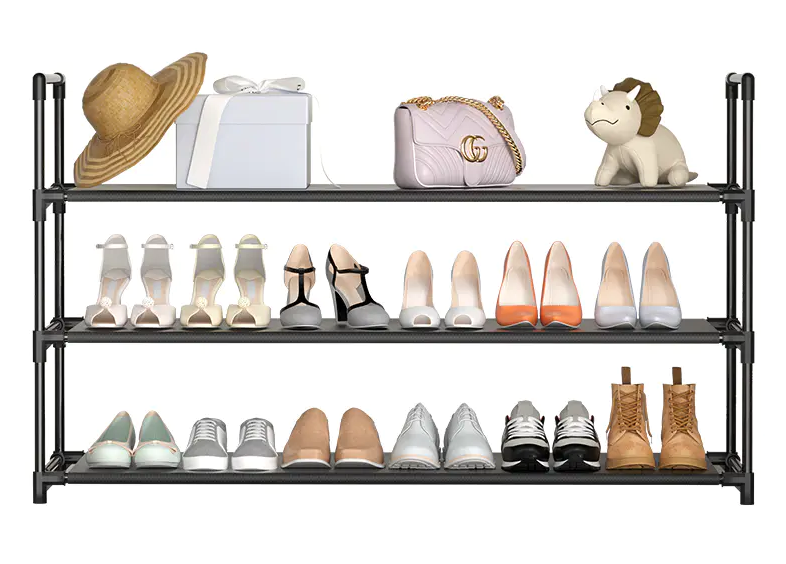
There’s no escaping the assembly question when someone buys a black metal shoe rack online. Many shoppers report that instruction clarity varies widely across products. Some units come with easy-to-follow guides that require minimal tools, while others leave buyers guessing which part goes where.
A related concern is hardware quality. Poorly fitting screws, uneven rods, or imprecise holes can add significant frustration and extend setup time. Users frequently recommend organizing all parts before starting assembly, and in some cases calling customer support if components appear mismatched.
Material thickness and finish also matter a lot. Thin metal things may look great in photos, but cheaper grades often bend under load or feel flimsy in daily use. Strong steel frames with powder coating resist rust and wear better over time — an important point if your shoe storage sees frequent use.
Placement is another practical tip. A metal shoe stand placed near the entryway gets plenty of action. That means dirt, moisture, and salt from outdoor shoes can interact with the rack. Powder-coated finishes help resist corrosion. But in coastal or humid climates, annual inspection and wipe-down cleaning can reduce long-term signs of wear.
Height and spacing between shelves also come up in buyer discussions. Fixed-tier shelves may not accommodate tall boots, leading buyers to remove middle boards or adjust tiers for extra clearance — a slightly improvised solution many users share online.
Finally, it’s worth noting that many organizers add rubber pads to the metal feet if they notice scratches on floors. This small modification can improve stability, reduce noise when moving the rack, and protect flooring in entryways or closets.

 English
 Arabic
 French
 Spanish
 Portuguese
 Deutsch
 Turkish
 Dutch
Dutch
 Italiano
 Romaian
 Portuguese (Brazil)
 Greek
Greek
 Indonesia