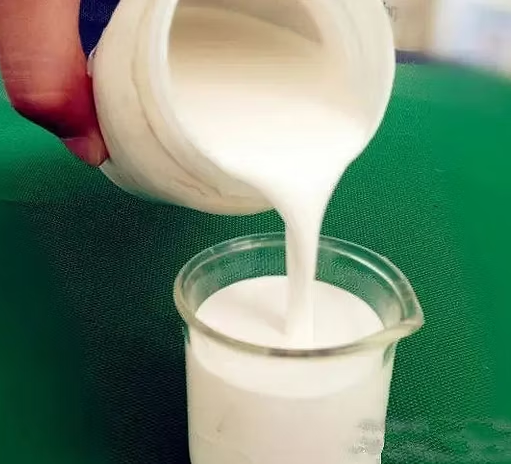
Among material scientists, formulators, and end users alike, discussions frequently revolve around how modified polymer emulsions differ from their standard counterparts. A specific focus for many is how carboxylated SBR compares with non-modified SBR latex in terms of performance characteristics relevant to their applications.
A key point of differentiation lies in the presence of carboxyl or ionic functional groups on the polymer chains in the modified latex, which enhance intermolecular interactions and adhesion to polar substrates. This can translate into higher bond strength and improved film cohesion in coating and adhesive applications compared with standard SBR emulsions.
Another practical concern among users is water resistance. The introduction of carboxyl groups generally improves resistance to moisture and humidity, which is particularly beneficial in packaging materials, coated paper products, or moisture-exposed construction surfaces.
Film formation behavior is also an important consideration. In coating applications, latex emulsions must coalesce properly to form a continuous protective layer. Modified latex systems often provide more uniform film formation and better mechanical integrity due to stronger internal cohesion, resulting in improved wear resistance and reduced cracking over time.
Users also ask about compatibility with other components in their formulations. Many carboxylated styrene butadiene latex products are designed to work with a wide range of pigments, fillers, and additives without destabilizing the emulsion, making them versatile binders in complex coating systems.
Overall, understanding these performance nuances helps users select and formulate materials that better meet the specific requirements of their applications—whether that’s durability, bonding strength, or environmental resilience.

 English
 Arabic
 French
 Spanish
 Portuguese
 Deutsch
 Turkish
 Dutch
Dutch
 Italiano
 Russian
 Portuguese (Brazil)
 Greek
Greek
 Indonesia