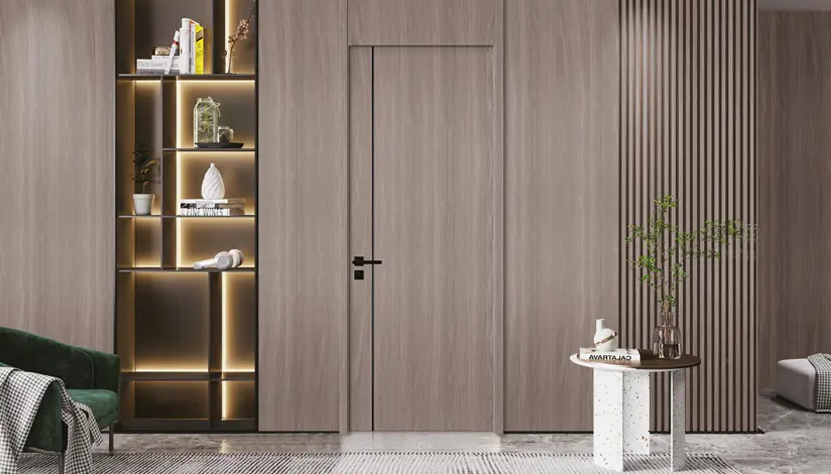
A major topic across social platforms and discussion forums is how residential interior doors affect privacy and noise control in everyday living spaces. While online guides often focus on materials and visual style, real users share experiences centered on how well doors perform in an active household — especially when those doors separate living areas, bedrooms, or home offices.
One recurring theme in discussions is that basic hollow-core doors tend to let sound travel easily between rooms. Many people choose a lightweight, simple style because it’s cost-effective or visually neutral, but then realize that these doors do little to dampen conversation, music, or television noise. People often compare alternatives, describing how heavier cores or denser materials noticeably reduce sound transmission, making a bedroom or study feel more private. This trade-off between cost, weight, and acoustic function is highlighted in numerous forum threads where users weigh their priorities before buying new doors.
Privacy is especially important for homes with multiple occupants. Parents, roommates, and home workers often express that a door that looks good isn’t enough if it doesn’t offer a sense of separation. One Reddit discussion points out that broad gaps between the door and the floor or frame can undermine privacy, rendering even solid doors ineffective at blocking sound if the installation isn’t tight. Online participants suggest adding sweeps, seals, or adjusting thresholds to address these gaps.
Interestingly, even plain interior doors — chosen for their minimalist aesthetic — receive criticism when they lack mass or sealing features. Enthusiasts on DIY forums talk about how such doors can slam easily, act like sound amplifiers, or create drafts that transfer noise and airflow across rooms. Suggestions from experienced DIYers include retrofitting weatherstripping or upgrading to doors with better core density to create a more effective sound barrier.
Homeowners also discuss how visual style plays into satisfaction with noise control. For example, some find that their plain-panel doors, while attractive in a minimalist interior, don’t align with the acoustic needs of a busy family space. These conversations underscore a simple truth: many people care less about a door’s look and more about how it performs with respect to everyday life, particularly in open-plan houses or shared living arrangements.
Across these threads, what stands out is that noise and privacy are “real-world” concerns that matter just as much as visual appeal — and often guide purchasing decisions more than design alone. People aren’t just debating styles or finishes; they’re discussing whether a door truly serves the needs of their home’s acoustics and personal spaces.

 English
 Arabic
 French
 Spanish
 Portuguese
 Deutsch
 Dutch
Dutch
 Italiano
 Russian
 Romaian
 Portuguese (Brazil)
 Greek
Greek
 Indonesia