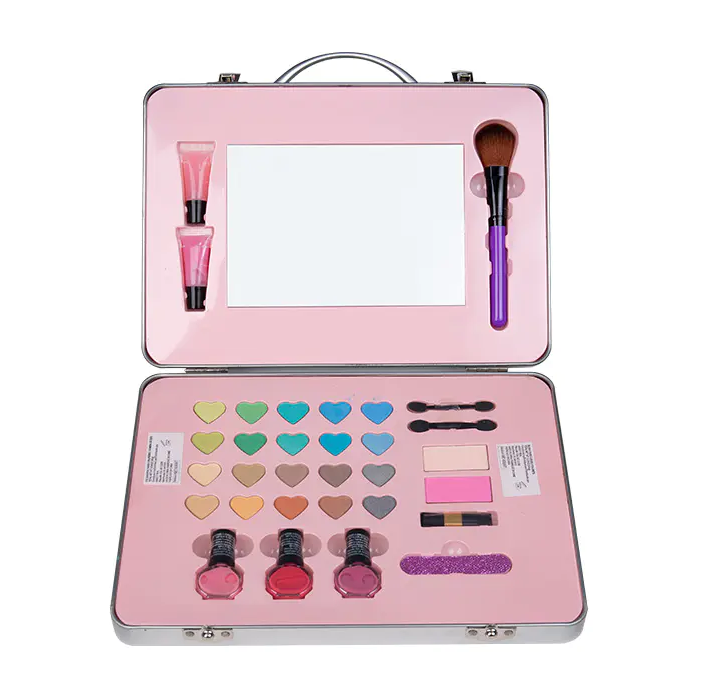
If you’re considering a Cosmetic Pre-School Toy or a set of Kids Cosmetics for your child, it’s important to go beyond fancy packaging and understand what you’re actually buying. Many play kits on the market vary widely in terms of safety and design features. Here are practical considerations that help caregivers make informed choices.
First, look for products with transparent ingredient lists and clear labeling. When a product is intended for application on skin, caregivers should be able to see every ingredient and confirm it does not contain known irritants. Avoid items that don’t provide this information, especially if they are promoted as “suitable for kids.”
Second, consider how easily the makeup can be removed. Washable, water-soluble products generally present less risk than long-lasting formulas, especially for younger children who may enjoy messy play but struggle with removal.
Third, be mindful of small parts and choking hazards. Even if a cosmetic play set seems safe chemically, accessories like tiny brushes, caps, or decorative pieces can pose physical risks for toddlers. Choose sets with age-appropriate parts and always supervise playtime.
Fourth, gauge your child’s interest and maturity. For children under three, experts often advise against any “makeup” application, even if it’s marketed as safe, because their skin barrier is still developing and more susceptible to irritation.
Finally, integrate boundaries and shared experiences. Accompany playtime so you can guide safe usage, set time-limited sessions, and make cleanup part of the activity. This model helps children learn responsible behavior around items that mimic adult cosmetic routines.
These tips help caregivers enjoy the fun of creative play without overlooking safety and development considerations.

 English
 Arabic
 French
 Spanish
 Portuguese
 Deutsch
 Turkish
 Dutch
Dutch
 Italiano
 Romaian
 Portuguese (Brazil)
 Greek
Greek
 Indonesia