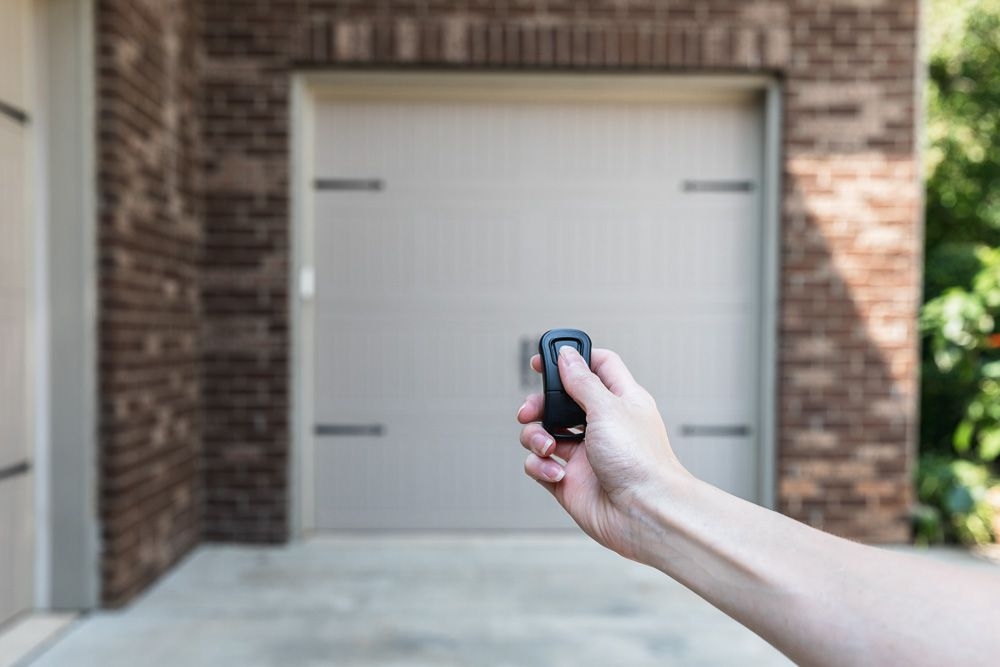
Garage door remote controls have an uncanny sense of timing. They don’t fail when you’re relaxed at home with nowhere to be. They fail when it’s raining, when you’re late, when you’re already annoyed, or when you’re sitting in the car questioning every life decision that led you to this moment.
This article explains Garage Door Remote Controls in a way that actually helps. How they work, why they stop working, what problems are genuinely caused by the remote (and which ones aren’t), and how Australian homeowners can avoid the most common frustrations.
This isn’t a sales pitch or a programming manual written by an engineer who’s never met a human. It’s a practical guide for people who just want the door to open when they press the button.
Quick Overview | Snapshot Summary
Garage Door Remote Controls may be small, but they’re a critical part of your garage door system. When they fail, it feels like the entire system has betrayed you personally.
At a glance:
-
Most remote failures are simple and preventable
-
Batteries are not always the real problem
-
Signal interference is more common than people think
-
Not all remotes are universal or interchangeable
-
Security and syncing matter more than age
If your remote has ever worked perfectly one day and refused the next, keep reading.
How Garage Door Remote Controls Actually Work
Despite appearances, your remote isn’t magic. It’s a small radio transmitter.
When you press the button:
-
The remote sends a coded radio signal
-
The motor’s receiver listens for that signal
-
If the code matches, the door moves
-
If it doesn’t, nothing happens and you sigh heavily
Modern remotes use rolling codes for security, meaning the signal changes each time. This prevents unwanted access but also means syncing matters.
Did You Know?
Older fixed-code remotes were easier to clone. Safer systems are smarter, but also less forgiving when something goes wrong.
Why Garage Door Remote Controls Fail (And Why It Feels Personal)
Remote failures usually fall into a few predictable categories.
Battery Issues (But Not Always the Obvious Way)
Yes, batteries die. But they also:
-
Lose charge in extreme heat or cold
-
Shift slightly inside the casing
-
Corrode at the contacts
A remote can light up and still not send a strong enough signal.
Signal Interference
Modern homes are full of wireless signals:
-
Wi-Fi routers
-
Security systems
-
Baby monitors
-
Smart devices
-
Neighbouring garages
All of these can interfere with remote communication.
Desynchronisation
Rolling-code systems can lose sync after:
-
Power outages
-
Motor resets
-
Programming interruptions
-
Repeated button presses out of range
Physical Wear
Remotes live hard lives. They get:
-
Dropped
-
Sat on
-
Left in hot cars
-
Exposed to moisture
Eventually, buttons and internal circuits give up.
Bold truth: Most remote failures aren’t dramatic. They’re gradual, ignored, and inconvenient by design.
When It’s Not the Remote at All
This is where frustration peaks.
Homeowners often blame the remote when the issue is actually:
-
A failing motor receiver
-
Misaligned safety sensors
-
Power supply interruptions
-
Motor logic board issues
-
Door resistance causing safety lockouts
If wall controls work but remotes don’t, it’s usually the remote.
If neither works, the problem is elsewhere.
Knowing the difference saves time and money.
Types of Garage Door Remote Controls
Not all remotes are interchangeable, despite what online listings imply.
Brand-Specific Remotes
-
Designed for specific motors
-
Best reliability
-
Higher compatibility
-
Higher cost
Universal Remotes
-
Can work across brands
-
Require careful programming
-
Not always fully compatible
-
Mixed results depending on motor age
Multi-Button Remotes
-
Control multiple doors
-
Convenient but easier to misprogram
-
Common in shared households
Key takeaway: Compatibility matters more than price.
Australian Conditions Make Remotes Fail Faster
Australia is not kind to small electronics.
-
Heat damages batteries and circuit boards
-
UV exposure degrades plastic casings
-
Dust enters button seals
-
Humidity causes internal corrosion
Leaving a remote in the car year-round is basically an endurance test. The remote did not agree to this lifestyle.
How Long Do Garage Door Remote Controls Last?
On average:
-
5–10 years, depending on use and conditions
Shorter lifespan if:
-
Stored in vehicles constantly
-
Exposed to heat and moisture
-
Dropped frequently
-
Used multiple times daily
Remotes usually fail slowly, not suddenly. Reduced range is often the first sign.
Quick Guide: When Your Remote Stops Working
The Situation
You press the button. Nothing happens. You press it again. Still nothing. You glare at the garage door like it’s doing this on purpose.
Common Challenges
-
“Is the remote dead or just out of sync?”
-
“Why does it work sometimes?”
-
“Do I need a new remote or a new motor?”
How to Solve It
Replace the battery properly
Check polarity, clean contacts, and test range.
Test close to the door
If it works nearby but not from the car, it’s signal-related.
Re-sync the remote
Follow the motor’s programming process carefully.
Check for interference
New devices or neighbours can disrupt signals.
Why It Works
Most remote issues are communication problems, not hardware failures. Fixing the connection restores reliability without unnecessary replacements.
If this sounds familiar, the fix is often simpler than expected.
Security: The Overlooked Side of Remote Controls
Garage door remotes are access keys to your home.
Modern systems protect against:
-
Code grabbing
-
Signal replay
-
Unauthorised access
Old or misprogrammed remotes increase risk.
Pro Tip:
If a remote is lost or stolen, reprogram the system immediately. Deleting old remotes is just as important as adding new ones.
DIY Fixes vs When to Get Help
You can safely:
-
Replace batteries
-
Reprogram remotes
-
Clean contacts
-
Test range and response
You should get help if:
-
Multiple remotes fail at once
-
Wall controls also fail
-
Programming doesn’t stick
-
Receiver issues are suspected
Remote problems sometimes expose bigger system issues. Ignoring them delays the inevitable.
Mini Quiz: Is Your Remote the Problem?
-
Does the wall button work but the remote doesn’t?
-
A) Yes
-
B) Sometimes
-
C) No
-
Has the remote range reduced recently?
-
A) No
-
B) A little
-
C) A lot
-
Has the remote been in a hot car regularly?
-
A) Rarely
-
B) Sometimes
-
C) Always
Results:
-
Mostly A’s: Likely a remote issue.
-
Mostly B’s: Early warning signs.
-
Mostly C’s: Your remote is tired and wants retirement.
FAQs
Are garage door remote controls universal?
No. Compatibility depends on motor brand, model, and frequency.
Can a remote lose programming?
Yes. Power interruptions and resets can cause desync.
Why does my remote work only when I’m close?
Weak batteries or signal interference are the usual causes.
Is replacing the remote better than repairing it?
Often yes. Remotes are sealed units and not designed for repair.
How much do garage door remote controls cost in Australia?
Prices vary by brand and type, but compatibility matters more than cost.
Conclusion
Garage door remote controls may be small, but they carry a big responsibility. They manage access, safety, and daily convenience, all while living in pockets, cars, and environments they were never designed for. When they fail, it’s rarely random. It’s usually the result of wear, interference, or simple neglect.
Understanding Garage Door Remote Controls helps you fix problems faster, avoid unnecessary replacements, and keep your garage door system reliable. Treat the remote like the key it is, and it will behave accordingly.
Even small devices deserve a little respect.

 English
 Arabic
 French
 Spanish
 Portuguese
 Deutsch
 Turkish
 Dutch
Dutch
 Italiano
 Russian
 Romaian
 Greek
Greek
 Indonesia