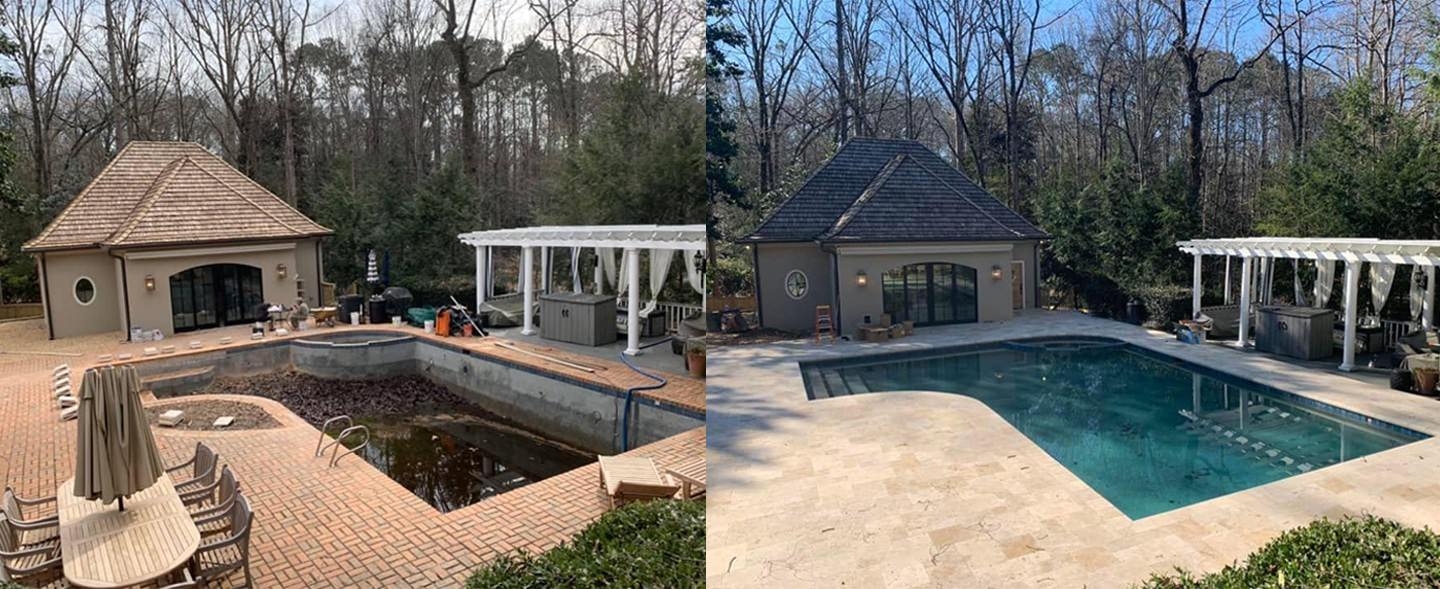
Pools don’t suddenly become bad. They slowly drift into sad.
Faded tiles. Stains that never quite leave. Equipment that groans louder than it works. And somehow, the water bill keeps climbing while your enthusiasm keeps sinking.
If that sounds familiar, you’re exactly who this article is for.
Pool Renovations aren’t about ripping everything out and starting from scratch. They’re about fixing what’s tired, outdated, inefficient, or quietly costing you money. For Australian homeowners, especially those with pools built 10–30 years ago, renovation is often the smartest move.
This guide breaks down how pool renovations work, when they’re worth it, what problems they actually solve, and how to tell if your pool needs help or just a stern conversation.
Quick Overview: Pool Renovations at a Glance
Pool renovations update, repair, or modernise an existing swimming pool without removing the entire structure.
Key takeaways:
-
Renovations often cost far less than rebuilding
-
Many “old pool problems” are fixable
-
Modern upgrades can reduce running costs
-
Safety, efficiency, and looks can all improve at once
If your pool still has good bones but bad vibes, renovation is usually the answer.
Want to dive deeper? Keep reading.
What Counts as Pool Renovations (and What Doesn’t)
Pool renovations sit in the sweet spot between minor repairs and full replacement.
They commonly include:
-
Resurfacing interiors (plaster, pebble, tiles)
-
Replacing cracked or outdated coping and tiles
-
Fixing leaks and structural wear
-
Upgrading filtration, pumps, and plumbing
-
Converting to saltwater or mineral systems
-
Adding steps, benches, or ledges
-
Improving pool surrounds and safety features
What it’s not:
-
Emergency patch jobs
-
Cosmetic-only band-aids
-
“Let’s ignore it another summer” strategies
Bold truth: Renovation fixes the cause, not just the symptom.
Why Australian Pools Age Faster Than You Think
Australia is not gentle on pools.
Sun exposure, temperature swings, water chemistry, and heavy use all take a toll. Even well-built pools eventually show signs of wear.
Common local stressors include:
-
UV damage to surfaces and seals
-
Expansion and contraction from heat
-
Mineral build-up from hard water
-
Old equipment not designed for modern efficiency standards
Did You Know?
Many pools built before the 2000s were never designed with today’s energy costs or water restrictions in mind.
Signs Your Pool Is Asking for Renovation (Politely… for Now)
Pools don’t send emails. They send hints.
Visual Red Flags
-
Cracks, chips, or rough surfaces
-
Faded or mismatched tiles
-
Persistent staining that won’t scrub off
Performance Issues
-
Water loss that isn’t evaporation
-
Cloudy water despite correct chemicals
-
Equipment that runs longer for worse results
Lifestyle Clues
-
You avoid inviting people over
-
Maintenance feels endless
-
The pool looks older than the house
If more than one of these applies, pool renovations are not a luxury. They’re maintenance with benefits.
Pool Renovations vs Rebuilding: A Reality Check
Full rebuilds get all the attention. Renovations do the real work.
Renovation Makes Sense When:
-
The shell is structurally sound
-
Layout still works for your yard
-
Problems are surface-level or mechanical
Rebuild Makes Sense When:
-
Structural failure is severe
-
Pool size or location is fundamentally wrong
-
Compliance issues can’t be resolved
Pro Tip:
Most Australian pools qualify for renovation, not replacement. And that’s good news for your budget.
How Pool Renovations Improve Efficiency (and Bills)
Old pools are expensive because they’re inefficient.
Renovations can include:
-
Variable-speed pumps that use less power
-
Modern filters that clean faster
-
Improved circulation design
-
Energy-efficient lighting
-
Smarter automation systems
Bold takeaway: A renovated pool often costs less to run than an “okay” old one.
Style Matters, But Function Comes First
Yes, renovated pools look better. But the real wins are functional.
Modern pool renovations focus on:
-
Safer entry points
-
Non-slip surfaces
-
Better depth transitions
-
Improved visibility
-
More comfortable water balance
A pool that looks great but hurts your feet or drains your wallet isn’t finished.
Quick Guide: Fixing a Tired Pool Without Starting Over
The Situation
Your pool still works, but it looks dated, costs too much to run, and feels like a chore rather than a feature.
Common Challenges
-
Why is maintenance getting harder every year?
-
Why does the pool never quite look clean?
-
Why does something always need fixing?
How to Solve It
Resurface the Interior
Fix rough finishes, stains, and leaks in one move.
Upgrade the Equipment
New pumps and filters improve water quality and cut power use.
Modernise the Surrounds
Updated coping and edges refresh the look instantly.
Improve Water Systems
Salt or mineral conversions make water easier to manage.
Why It Works
Targeted pool renovations solve multiple problems at once, restoring both function and confidence.
If this sounds familiar, renovation is likely the smarter option.
Renovating for Safety and Compliance
Pool safety standards evolve. Older pools don’t.
Renovations can help address:
-
Slippery surrounds
-
Outdated fencing layouts
-
Poor visibility areas
-
Trip hazards
This isn’t about bureaucracy. It’s about preventing accidents and stress.
Small Renovations Can Make a Big Difference
Not every renovation is dramatic.
Even modest updates like:
-
New waterline tiles
-
Improved steps
-
Better lighting
-
Updated coping
can transform how the pool feels and functions.
Did You Know?
Many homeowners renovate in stages, spreading cost while improving usability immediately.
Quick Quiz: Is Your Pool Ready for Renovation?
Answer honestly.
-
Is your pool over 10 years old?
-
Does maintenance feel harder than it used to?
-
Are repairs becoming more frequent?
-
Does the pool feel outdated compared to the house?
-
Would you renovate if cost wasn’t scary?
If you said yes to two or more, your pool is probably overdue for attention.
FAQs About Pool Renovations
How long do pool renovations usually take?
Minor renovations may take a few days. Larger resurfacing or equipment upgrades can take several weeks, depending on scope and weather.
Can pool renovations be done in stages?
Yes. Many homeowners prioritise structural or efficiency upgrades first, then cosmetic improvements later.
Are pool renovations messy?
There’s some disruption, but far less than a full rebuild. Most work is contained to the pool area.
Will renovations reduce maintenance?
In most cases, yes. Modern systems and finishes are designed to be easier to manage.
Is it better to renovate before selling a home?
Often, yes. A refreshed pool improves buyer confidence without the cost of a rebuild.
Conclusion
A tired pool doesn’t need to be replaced. It needs attention.
Pool Renovations allow Australian homeowners to restore function, safety, efficiency, and style without starting over. With the right upgrades, an old pool can feel new again, cost less to run, and become something you actually enjoy using.
If your pool feels more like a problem than a perk, renovation might be the fix that brings it back to life.

 Arabic
 French
 Spanish
 Portuguese
 Deutsch
 Turkish
 Dutch
Dutch
 Italiano
 Russian
 Romaian
 Portuguese (Brazil)
 Greek
Greek
 Indonesia