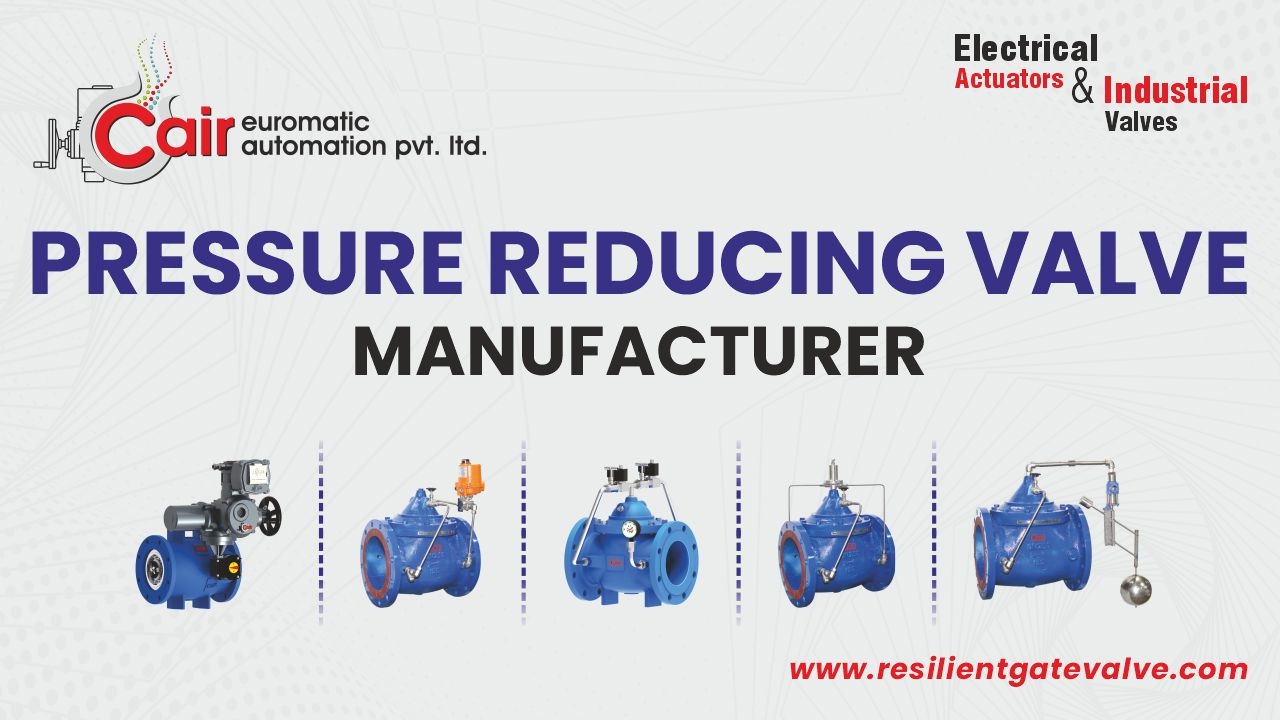
In modern water supply networks and industrial pipelines, managing pressure is just as important as controlling flow. Too much pressure can damage pipes, valves, and equipment, while low pressure can affect system performance. This is where a Pressure Reducing Valve (PRV) plays a vital role.
This guide explains the basics of pressure reducing valves in simple words. Whether you are a design engineer, site supervisor, or plant operator, understanding how a PRV works will help you build safer, longer-lasting, and more efficient systems. At Cair, we focus on reliable valve solutions that engineers can trust in real-world conditions.
What Is a Pressure Reducing Valve?
A pressure reducing valve is a mechanical device used to automatically reduce high inlet pressure to a stable, lower outlet pressure. The key feature of a PRV is that it maintains the required downstream pressure even when upstream pressure fluctuates.
Unlike manual valves that need constant adjustment, a PRV works automatically. Once set, it continuously controls pressure without human intervention. This makes it essential in water distribution, industrial processing, HVAC systems, and fire protection networks.
Why Pressure Control Matters in Engineering Systems
Excess pressure can cause serious problems such as:
-
Pipe leakage and bursting
-
Damage to downstream valves and instruments
-
Increased maintenance costs
-
Energy loss and inefficient operation
By installing a properly sized PRV, engineers can protect the entire pipeline system. Many Pressure Reducing Valve manufacturers, including Cair, design valves specifically to handle Indian operating conditions like variable pressure, high temperatures, and continuous duty cycles.
Basic Components of a Pressure Reducing Valve
Although designs may vary, most pressure reducing valves include:
-
Valve Body – Houses all internal components
-
Spring or Pilot Mechanism – Sets the outlet pressure
-
Diaphragm or Piston – Senses downstream pressure
-
Valve Seat and Disc – Regulates flow
-
Adjustment Screw – Allows pressure setting
These components work together to keep outlet pressure stable, even when demand changes.
How Does a Pressure Reducing Valve Work?
The working principle of a pressure reducing valve is simple yet highly effective:
-
High-pressure fluid enters the valve from the inlet side
-
The spring or pilot system is set to the desired outlet pressure
-
When downstream pressure is low, the valve opens to allow more flow
-
As outlet pressure increases, it pushes against the diaphragm or piston
-
Once the set pressure is reached, the valve partially closes
This continuous balancing action ensures stable downstream pressure. Engineers prefer PRVs because they react instantly to pressure changes without external power.
Types of Pressure Reducing Valves
Direct-Acting Pressure Reducing Valves
-
Simple design
-
Best for small flow rates
-
Cost-effective and easy to maintain
Pilot-Operated Pressure Reducing Valves
-
Higher accuracy
-
Suitable for large pipelines and high flow
-
Common in municipal and industrial systems
Cair offers PRVs designed to integrate smoothly with other pipeline valves such as butterfly valves and gate valves.
Where Are Pressure Reducing Valves Used?
Pressure reducing valves are widely used in:
-
Municipal water supply systems
-
Industrial processing plants
-
High-rise building plumbing
-
Fire protection systems
-
Power plants and utilities
In many projects, PRVs are installed alongside Double Flanged Butterfly Valve units for isolation and maintenance purposes. This combination provides both pressure control and reliable shut-off.
Role of Butterfly Valves in Pressure-Control Systems
Although butterfly valves do not reduce pressure automatically, they support PRVs by controlling flow and isolating sections of the pipeline.
Commonly used butterfly valves include:
-
Wafer type butterfly valve – Compact and lightweight
-
Motorized butterfly valve – Automated flow control
-
Motorized double flange butterfly valve – Heavy-duty applications
As a Top Butterfly Valve Manufacturer, Cair designs butterfly valves that work seamlessly with pressure reducing valves in water and industrial applications.
Manual vs Motorized Valve Integration
Modern pipeline systems often combine PRVs with motorized valves for enhanced control:
-
Manual valves are simple and economical
-
Motorized butterfly valves allow remote operation
-
Automation improves safety and system efficiency
Engineers increasingly prefer motorized solutions in smart water networks and automated plants.
Key Benefits of Using Pressure Reducing Valves
Installing a PRV offers several long-term advantages:
-
Protects pipelines from overpressure
-
Extends valve and equipment life
-
Reduces water loss and leakage
-
Improves system reliability
-
Lowers maintenance costs
When sourced from a trusted Pressure Reducing Valve manufacturer, these benefits multiply due to better material quality and precise engineering.
How to Select the Right Pressure Reducing Valve
Engineers should consider the following factors:
-
Inlet and outlet pressure range
-
Flow rate requirements
-
Type of fluid (water, steam, chemicals)
-
Installation orientation
-
Maintenance accessibility
Matching PRVs with suitable butterfly valves ensures smooth operation and simplified system design.
Why Engineers Trust Cair
At Cair, we understand that engineers need valves that perform reliably under real operating conditions. Our pressure reducing valves and butterfly valves are manufactured with strict quality checks and robust materials.
As a Top Valve Manufacturer, Cair focuses on:
-
Precision engineering
-
Durable construction
-
Easy installation
-
Long service life
Our product range includes pressure reducing valves, wafer and double flanged butterfly valves, and motorized valve solutions for diverse industries.
Conclusion
Understanding pressure reducing valve basics is essential for every engineer working with water or industrial pipelines. A well-designed PRV protects systems, improves efficiency, and ensures safe operation. When combined with high-quality butterfly valves, it forms the backbone of reliable pressure and flow management.
Choosing valves from a trusted manufacturer like Cair ensures long-term performance, reduced downtime, and peace of mind for engineers and operators alike.
If you’re planning a new project or upgrading an existing system, investing in the right pressure reducing valve solution is a decision that pays off for years to come.

 Arabic
 French
 Spanish
 Portuguese
 Deutsch
 Turkish
 Dutch
Dutch
 Italiano
 Russian
 Romaian
 Portuguese (Brazil)
 Greek
Greek
 Indonesia