If you want fast results in digital marketing, Google Ads is one of the most powerful tools you can use. Unlike SEO, which takes time, Google Ads can bring traffic, leads, and sales almost instantly.
In 2026, businesses of all sizes from small startups to large brands use Google Ads as a core part of their PPC (Pay-Per-Click) strategy. Every successful digital marketing agency also relies on it to deliver quick and measurable results.
But if you’re a beginner, Google Ads can feel confusing.
Don’t worry this guide will walk you through everything step by step in a simple way.
Why Google Ads Still Works in 2026
Even with the rise of social media and AI tools, Google Ads remains highly effective.
Why?
Because people use Google when they are actively searching for something.
For example:
-
“Best digital marketing agency near me”
-
“SEO services for small business”
-
“Content marketing tips”
These are high-intent searches meaning users are already interested.
A professional digital marketing agency focuses on targeting these users because they are more likely to convert into customers.
What Are Google Ads?
Google Ads is an online advertising platform where businesses pay to show their ads on Google search results, YouTube, and other websites.
It works on a PPC (Pay-Per-Click) model, which means:
-
You only pay when someone clicks your ad
This makes it cost-effective when used correctly.
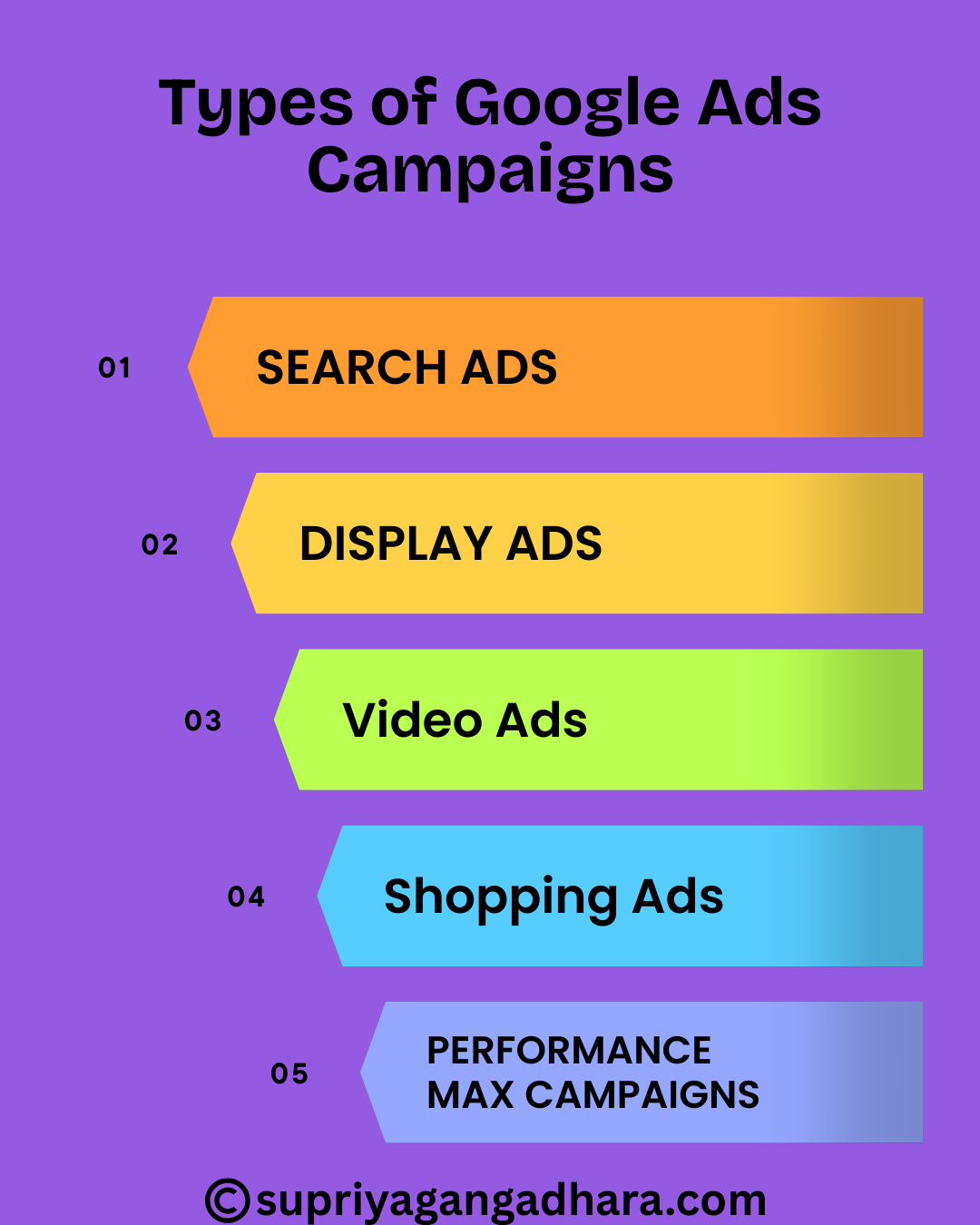
Types of Google Ads Campaigns
Before starting, you need to understand the main types of campaigns:
1. Search Ads
Text ads that appear on Google search results.
Example:
When someone searches “Email Marketing services,” your ad appears.
2. Display Ads
Image ads shown on websites and apps.
3. Video Ads
Ads shown on YouTube.
4. Shopping Ads
Product-based ads for e-commerce.
5. Performance Max Campaigns
AI-powered campaigns that run across all Google platforms.
A beginner should usually start with Search Ads.
Step-by-Step Guide to Running Google Ads
Let’s go step by step.
Step 1: Define Your Goal
Before creating ads, decide what you want:
-
Website traffic
-
Leads (form submissions, calls)
-
Sales
For example, a digital marketing agency may aim to generate leads for services like Content marketing or PPC management.
Step 2: Do Keyword Research
Keywords are the words people type into Google.
Choose keywords that:
-
Are relevant to your business
-
Have good search volume
-
Show buying intent
Examples:
-
“Best PPC services”
-
“Content marketing agency”
-
“Email marketing strategy”
Tip: Focus on long-tail keywords (more specific phrases).
Step 3: Create Your Campaign
In Google Ads:
-
Select your campaign type (Search Ads)
-
Set your location (country, city)
-
Choose your budget
Start small and increase as you see results.
Step 4: Write High-Converting Ads
Your ad should include:
-
A strong headline
-
A clear benefit
-
A call-to-action (CTA)
Example:
Headline: “Boost Your Traffic with Expert PPC”
Description: “Get more leads with proven strategies. Contact us today.”
A skilled digital marketing agency focuses on writing ads that highlight benefits, not just features.
Step 5: Create a Landing Page
When users click your ad, they should land on a relevant page.
Your landing page should:
-
Match the ad message
-
Be simple and clear
-
Have a strong CTA
For example:
If your ad is about Content marketing, your landing page should talk only about that, not everything else.
Step 6: Set Your Budget and Bidding
You decide how much you want to spend daily.
Google Ads uses bidding to decide:
-
Which ads show
-
In what position
Start with:
-
Manual or automated bidding
-
A small daily budget
Then optimize over time.
Step 7: Track and Optimize
This is the most important step.
Track:
-
Clicks
-
Conversions
-
Cost per click (CPC)
Improve by:
-
Testing new keywords
-
Updating ad copy
-
Improving landing pages
Every expert digital marketing agency focuses heavily on optimization.
Proven Strategies for Better Results
To succeed with Google Ads in 2026, follow these proven strategies:
1. Focus on Intent
Target users who are ready to take action.
2. Use Negative Keywords
Exclude irrelevant searches to save money.
Example:
If you offer paid services, exclude “free.”
3. Improve Quality Score
Google rewards ads that are:
-
Relevant
-
High-quality
-
Useful
This lowers your costs and improves performance.
4. Combine PPC with Content Marketing
Use ads to drive traffic to valuable content.
For example:
-
Blog posts
-
Guides
-
Case studies
This improves trust and conversions.
Building Credibility with Ads
Running ads is not just about visibility, it's about trust.
1. Be Honest
Don’t make false claims.
2. Match Expectations
Your landing page should deliver what your ad promises.
3. Provide Value
Offer useful content or solutions.
A reliable digital marketing agency always focuses on long-term trust, not just quick clicks.
Common Mistakes Beginners Make
Avoid these common mistakes:
-
Targeting too many keywords
-
Sending traffic to a poor landing page
-
Ignoring data and analytics
-
Not testing different ads
-
Setting unrealistic budgets
Fixing these can improve your results quickly.
How Google Ads Fits with Content Marketing and PPC
Google Ads is a key part of your overall PPC strategy.
When combined with Content marketing, it becomes even more powerful:
-
Use ads to promote blog content
-
Capture leads through valuable resources
-
Build long-term relationships
This is the strategy used by every top digital marketing agency.
Conclusion
Google Ads is one of the fastest ways to grow your business online.
By following this step-by-step guide, you can:
-
Launch your first campaign
-
Generate traffic and leads
-
Improve results over time
For any business or digital marketing agency, mastering Google Ads is essential in today’s competitive market.

 English
 Arabic
 French
 Spanish
 Portuguese
 Deutsch
 Turkish
 Dutch
Dutch
 Italiano
 Russian
 Romaian
 Portuguese (Brazil)
 Greek
Greek