In the B2B optoelectronics sector, the prism is often regarded as a "solved" component—a fundamental block of glass used to bend, flip, or displace light. However, as system requirements shift toward higher resolutions, shorter wavelengths, and more compact form factors, the humble prism has become a frequent source of "silent" system failures.
For engineers developing hyperspectral imaging systems, high-speed telecommunications modules, or industrial laser cutters, the challenge isn't just "bending light." It is maintaining wavefront integrity while the light is inside the glass. If the prism is not perfectly specified for the application, it becomes the weakest link in your optical train.
The Problem: When Geometric Precision Meets Physical Reality
When integrating a prism into a high-end optical engine, engineering teams typically face three critical technical bottlenecks:
-
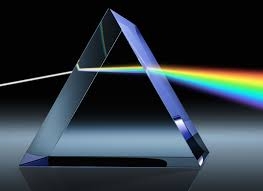
Chromatic Dispersion and Aberration: Every glass substrate has an Abbe number. If you are working with a broad spectrum of light, the prism will naturally split those wavelengths (chromatic dispersion). In a B2B sensor application, this results in "color fringing" or a loss of data accuracy at the edges of the sensor.
-
The Angular Tolerance Trap: A "90-degree" prism is rarely exactly 90 degrees. In long-path optical systems, a deviation of even a few arc-seconds in the roof angle can result in a beam displacement of several millimeters at the target. This makes automated assembly and field calibration a nightmare.
-
Total Internal Reflection (TIR) Failures: Relying on TIR is efficient, but it is highly sensitive to surface contamination and the angle of incidence. In high-vibration environments, like automotive or aerospace, slight shifts in the mounting can cause the TIR to fail, leading to sudden signal loss.
Solving the Precision Crisis in Prism Integration
To overcome these hurdles, B2B manufacturers must move away from "catalog" components and toward application-specific prism architectures that account for environmental and spectral variables.
1. Correcting Dispersion with Achromatic Design
If your system requires high-fidelity color or multi-spectral data, a single-material prism is often insufficient. Engineers are increasingly turning to Achromatic Prisms—pairs of different glass types (like Crown and Flint) bonded together.
-
The Result: The dispersion from the first glass is cancelled out by the second, allowing the beam to be redirected without being split into its constituent colors. This is vital for medical diagnostic equipment where spectral purity is non-negotiable.
2. Eliminating Alignment Errors with Monolithic Assemblies
Traditional optical benches use separate mirrors and mounts, which are prone to thermal drift. By replacing multiple mirrors with a single, complex prism assembly (such as a Penta Prism or a Schmidt-Pechan Prism), you lock the optical geometry into the glass itself.
-
Why it works: Because the angles are polished into the substrate, the internal alignment cannot be "knocked out" by vibration. This is the gold standard for high-end Electronic Viewfinders (EVF) and surveying equipment.
Material Science: Choosing the Right Substrate
In a B2B context, the material of the prism is just as important as its shape. Depending on your operational environment, you may need to look beyond standard N-BK7 glass.
-
Fused Silica: Best for high-power laser applications and UV transparency. It has an incredibly high damage threshold and excellent thermal stability.
-
Calcium Fluoride ($CaF_2$): Essential for IR (Infrared) applications where standard glass becomes opaque.
-
High-Index Glass: When space is at a premium, using high-index glass allows for a smaller prism to achieve the same degree of light bending, which is critical for the miniaturization of AR/VR optical engines.
Semantic Keywords for Technical SEO and Authority
To ensure this article reaches the right R&D leads and procurement managers, we utilize semantic keywords that signal professional expertise to search engines:
-
Arc-second Tolerance: The industry-standard measurement for angular precision.
-
Surface Flatness ($\lambda/10$): Indicating the quality of the polished face relative to the wavelength of light.
-
Birefringence: The phenomenon where light polarization changes as it passes through stressed glass—a key concern in precision optics.
-
Antireflective (AR) V-Coatings: Specific thin-film coatings designed to maximize throughput at a single laser wavelength.
By focusing on these "problem-solving" terms, the content is indexed as a high-value technical resource rather than a generic product description.
Conclusion
The prism is the anchor of the optical path. While it may seem like a simple component, the physics of dispersion, surface quality, and angular tolerance dictate the success or failure of your entire optoelectronic system.
By treating prism selection as a core engineering task—focusing on achromatic correction and high-tolerance substrates—B2B manufacturers can eliminate signal noise and future-proof their hardware for the next generation of high-precision applications.

 English
 Arabic
 French
 Spanish
 Portuguese
 Deutsch
 Turkish
 Dutch
Dutch
 Italiano
 Russian
 Romaian
 Portuguese (Brazil)
 Greek
Greek