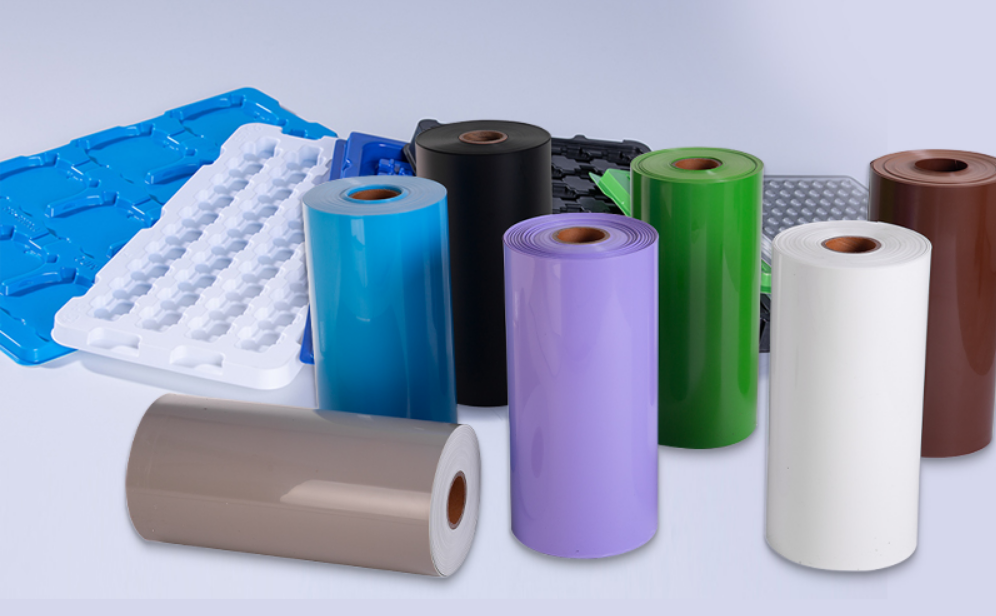
Materials with static control properties such as PS Black Conductive and Clear Antistatic PS are increasingly used in industries where electrostatic discharge (ESD) can cause product quality issues, safety hazards, or reduced yields. Understanding specific applications helps clarify why these materials are in demand.
In the electronics manufacturing and packaging industry, static control is critical. Components like semiconductors, integrated circuits, and precision connectors are extremely sensitive to charge buildup. Using static-dissipative materials in trays, carriers, and reels helps protect parts from ESD events during storage, handling, and transportation. This reduces defect rates and improves overall yield.
Antistatic sheet materials are also valuable in environments where dust attraction must be minimized. Plastics without static control tend to attract lint and particles, which can interfere with optical sensors, precision equipment, and cleanroom operations. Using a tailored static-control PS sheet minimizes dust accumulation on surfaces during manufacturing and assembly processes.
In the packaging of consumer electronics, aesthetic considerations often go hand-in-hand with functionality. That’s where clear antistatic polystyrene becomes a compelling choice. It allows visibility of the packaged item while guarding against static-related issues such as charge accumulation and contamination.
Industrial equipment housings, instrument panels, and internal components also benefit from controlled static properties. Static-dissipative plastics help reduce interference with sensitive measurement equipment, contributing to safer operational environments.
Finally, in warehouse and logistics contexts, products made from static-control materials lower the risk of sparks that could ignite flammable atmospheres. Charge control thus plays a role not only in product protection but also in safety management.

 English
 Arabic
 French
 Spanish
 Portuguese
 Deutsch
 Turkish
 Italiano
 Russian
 Romaian
 Portuguese (Brazil)
 Greek
Greek
 Indonesia