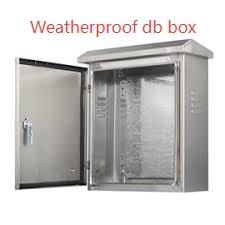
Selecting the right distribution solution is a project-defining choice; the Outdoor Electrical Distribution Panel often serves as the engineered centrepiece that organizes feeders, protection, and control while shielding equipment from weather and debris. Early in planning, many engineers specify the Outdoor Electrical Distribution Panel because it combines clear wiring access with rugged sealing, reducing installation time and preventing environmental-induced failures.
Site assessment and specification
Start with a site-driven assessment. Evaluate exposure to rain, sun, salt spray, dust, and mechanical impact. Determine the maximum ambient temperature, expected humidity, and potential for airborne contaminants. Specify ingress protection and material systems based on that assessment: stainless or coated steel for corrosive atmospheres, UV-stable polymers for high-UV regions, and reinforced alloys for high-impact zones. Also consider future capacity requirements and reserve space for feeders and spare breakers.
Mechanical and electrical layout best practices
A panel's internal organization is critical for both safety and serviceability. Use standardized backplates, DIN-rail sections, and modular mounting kits to speed assembly and make component replacement straightforward. Separate power devices from sensitive controls to reduce heat and electromagnetic interference. Provide clear labeling and a logical wire routing plan so technicians can trace circuits quickly. Leave service clearance space and design door swings that permit comfortable access to breakers and terminations.
Thermal strategies and component placement
Heat is an enemy of electrical equipment. Arrange heat-generating devices at the lower sections to promote convective cooling, or use conductive backplates when passive dissipation is required. For hot climates, consider filtered fan kits or thermostatic ventilation to prevent sustained high internal temperatures. In cold climates, a small heater prevents condensation and keeps protective relays functioning. Evaluate both steady-state and transient thermal loads — short-duration high currents can significantly increase enclosure temperature.
Security and monitoring (Nante)
Protecting outdoor panels against tampering and unnoticed faults increases operational resilience. Specify recessed lock wells, tamper-proof fasteners, and hinge pins that cannot be removed without tools. Integrate tamper switches or door sensors to feed into building management or security systems. For predictive maintenance, add remote telemetry for temperature, humidity, and feeder current that issues alerts before failures occur. Simple monitoring choices can convert routine maintenance into condition-based intervention.
Testing, compliance, and lifecycle planning
Choose panels with verified test reports covering IP/NEMA ratings, UV resistance, salt spray, and mechanical impact standards relevant to the application. Third-party certification reduces procurement risk and improves regulatory acceptance. Plan a lifecycle schedule that includes gasket replacement intervals, torque checks on terminal hardware, and finish inspections. Keep a bill of materials that lists approved spares so repairs use identical parts and preserve original environmental ratings.
Installation, commissioning, and documentation
Successful field outcomes rely on tight coordination between procurement, installers, and operations staff. Provide clear commissioning checklists that include torque values, insulation resistance readings, and verification of drainage and seal integrity. Document cable entry methods, sealing compounds used, and any applied corrosion-resistant coatings so future teams understand past choices. Train maintenance personnel on the panel's specific access points and any monitoring systems installed.
Adaptability and modular growth
Design panels with adaptability in mind. Removable subpanels, spare bus stabs, and reserve mounting space enable capacity growth without full replacement. Modular components, such as plug-in breakers or draw-out motor starters, simplify upgrades and shorten downtime. When retrofitting legacy sites, look for mounting kits and conversion plates that preserve seal integrity while modernizing internal layouts.
Real-world installations show that modest upfront attention to materials, thermal strategy, and access details often saves substantial operational expense over a facility's life. Thoughtful specification reduces emergency replacements, simplifies routine service, and increases uptime.For detailed case studies, certified datasheets, and installation guidance specific to our outdoor distribution products, see https://www.nante.com/news/industry-news/outdoor-electrical-distribution-panel-nante.html

 English
 Arabic
 French
 Spanish
 Portuguese
 Deutsch
 Turkish
 Dutch
Dutch
 Italiano
 Russian
 Romaian
 Portuguese (Brazil)
 Indonesia